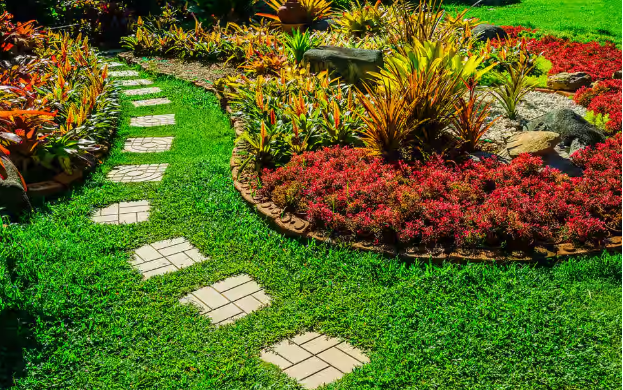
Boca Raton is not your typical Florida city. It sits between two distinct ecological zones — the Atlantic coastal ridge on one side, the Everglades watershed on the other. That geography quietly controls everything. Soil drainage, plant survival, seasonal water behaviour — all of it connects back to where this city actually sits on the map. Most gardening advice never accounts for any of that. Landscaping in Boca Raton done well starts with understanding this local reality, and homeowners who skip that part tend to keep fixing the same problems over and over.
Sandy Soil Deceives
It looks manageable. Dig into it and the truth comes out quickly. Boca Raton’s sandy soil drains so fast that nutrients are gone before roots get a proper chance at them. Pouring imported topsoil on top does not help — it creates a hidden layering issue where water hits the boundary between soils and pools in the worst possible spots. What actually works is working compost deeply into the ground, consistently, over time. Gardens that skip this early step look tired and thin within a couple of seasons no matter how much attention they receive afterward.
Salt Air Is Quiet Damage
There are no dramatic warning signs. That is what makes salt air so costly for coastal properties. It creeps in, deposits on leaf surfaces, and slowly breaks down plant tissue without announcing itself. Edges brown a little. Growth slows. Gardeners reach for pest treatments and fungicides, spending money on the wrong diagnosis entirely. Sea grape, saw palmetto, and beach sunflower belong near the coast because they are built for it. Sensitive species planted in that same environment will decline — slowly, stubbornly, and expensively.
Irrigation Timing Gets Ignored
Fixed irrigation schedules are everywhere in this city. They run whether it rained an hour ago or not. Boca Raton’s summers bring heavy afternoon downpours with real consistency, and watering on top of already saturated ground in the evening creates exactly the overnight conditions that root rot and fungal disease thrive in. Morning irrigation changes this. Florida law requires functioning rain sensors on irrigation systems too, yet plenty of properties still run without them doing anything useful at all.
Tree Placement Has Consequences
Choosing a tree is also choosing what happens to your driveway, pool enclosure, and underground plumbing in the years ahead. Fast-growing species with aggressive surface roots look impressive early on. Later, they find their way into concrete and plumbing quietly and persistently. Landscaping in Boca Raton that factors in a tree’s mature root spread — not just how tall it will grow — protects the property from serious structural costs. Live oaks and gumbo limbo trees offer genuine shade. Their roots behave far more predictably than the popular fast-growers that cause trouble long after the planting decision is forgotten.
Florida-Friendly Goes Beyond Marketing
This is not just a label on a plant tag. The Florida-Friendly Landscaping programme carries real design and plant standards built around local conditions. Reducing fertiliser runoff into Boca Raton’s canal network and the Intracoastal Waterway sits at the heart of it — a genuinely pressing local concern. The practical side matters too. Plants selected under these standards need no fertiliser once they are properly established. Maintenance demands drop. Gardens perform steadily rather than lurching between good weeks and poor ones depending on the last feeding schedule.
Mulch Depth Actually Matters
Fresh mulch always looks like enough. In South Florida’s heat and humidity, it breaks down far faster than it does anywhere cooler. What seems like solid coverage disappears within weeks. Going deeper than standard recommendations is the practical reality here — enough to suppress weeds, hold soil moisture, and buffer root temperatures during peak summer heat. Piling mulch against tree trunks is a separate problem entirely. It sits there looking tidy while slowly rotting the base of the tree from the outside in.
Lighting Deserves Early Planning
Most people add outdoor lighting last. then, the budget is stretched and the design has no room for it. A single well-placed uplight on a mature palm does more visual work than a long row of path lights across flat lawn. Landscaping in Boca Raton serves outdoor living across every season, and gardens used at night need to be designed for it from the start. Retrofitting lighting through an established garden is difficult. Planning it early costs less and produces far better results.
Conclusion
Boca Raton’s environment is specific, and it does not forgive generic approaches for long. Salt exposure, fast-draining soil, heavy summer rain, and sensitive near waterways all shape what actually holds up here over time. Homeowners who treat these as real design constraints — rather than minor local footnotes — end up with gardens that stay healthy without constant intervention. Landscaping in Boca Raton rewards close attention to local conditions above everything else. Borrowed advice written for different climates and different soils rarely survives contact with this particular place.