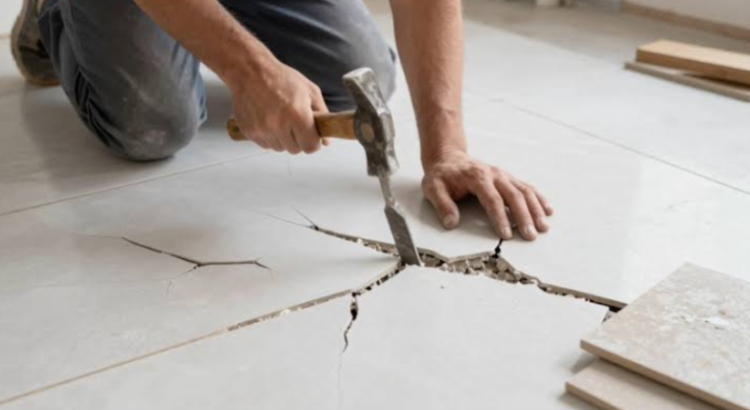
When tiles give a hollow sound on tapping, this is mostly a sign that bonding underneath has failed, and for this reason, drummy tile repair is the process which is used for restoring the broken connection between tile and the substrate below it. This kind of issue is very common in floor tiling as well as wall tiling, and it occurs when the layer of adhesive that is holding tile in its place starts failing, and because of this an air gap gets created. If this problem is not treated on time, tiles that are affected may crack, get lifted, or in some cases pop out completely from their position, and that is the reason why finding and fixing this problem early is so important for keeping any tiled surface in good condition for long term.
What Causes Tiles to Become Drummy
There are several reasons because of which this kind of bonding failure can happen. Once the cause is properly understood, correct repair method becomes easier to decide.
- Adhesive not applied properly at time of original installation, like not enough coverage or wrong trowel technique being used
- Moisture that gets trapped under the tile, which makes the adhesive weak with passing time
- Substrate showing movement, such as concrete slab expanding or contracting due to change in temperature
- Adhesive type which is not suitable for the surface or for the material of tile
- Traffic that is heavy on foot, or impact, which slowly loosens the bonding
- Adhesive becoming old and breaking down naturally after many years
In most of the cases, it is not just a single reason but combination of many such issues which leads to tiles sounding hollow.
How Are Drummy Tiles Identified?
Most common way for checking this is a simple sound test. By tapping surface of every tile using something hard, like a coin or handle of a tool, difference in sound can be noticed easily. A tile which is solid gives a sharp and consistent tone, while one that is drummy makes a dull, hollow kind of echo. Many times, this test is done in proper manner across whole floor or wall, so that affected tiles and firmly bonded ones can be mapped out clearly.
There are visual signs too which can indicate this problem, such as small hairline cracks, edges slightly raised up, or tiles feeling less stable when walked upon as compared to tiles around them.
Can Drummy Tiles Be Fixed Without Removing Them?
This question comes up very often, and answer for this depends mostly on how severe the issue actually is. In situations where air pocket is small and tile itself has no damage, methods based on injection can be applied. Through a small hole which is drilled, a special resin or adhesive gets injected below the tile, and this fills up the gap, making tile bonded again to substrate, without any need of removing it. Such method works quite well for spots that are isolated, and it also helps in avoiding extra cost and disturbance that comes with replacing tile completely.
But in case tile has cracked, become badly warped, or drummy area is spread widely, then removing and reinstalling it becomes the more dependable choice.
Does a Drummy Tile Mean the Floor Is Unsafe?
Not in every case, but it surely shows a weak point that can become worse as time passes. One small area alone may not create immediate danger, but once the air gap becomes bigger or spreads towards tiles nearby, chances of cracking and movement increase a lot. In places having heavy traffic, or areas where moisture is common, this can result eventually in tiles shifting under feet, and that becomes a real hazard for tripping. Fixing this issue while it is still small and isolated is, in general, much simpler than handling widespread damage at later stage.
How Long Does the Repair Process Take to Settle?
Time required for repair changes according to which method gets used. In case of injection repair, surface can often be walked upon fairly soon once resin becomes set, because this process is less invasive in nature. Removing tile completely and putting new one takes longer time, since it includes removing old adhesive, preparing substrate properly, placing new tile, then allowing grout and adhesive to cure well before that area becomes ready again for normal use.
Final Thoughts
Tiles making hollow sound are a clear indication that something beneath surface needs attention, and drummy tile repair takes care of this gap before it turns into bigger issue related to safety or structure. Whether fix involves injecting resin for one small isolated patch, or a more detailed process of removing and relaying tile for damage that is extensive, the main goal behind it stays same, which is restoring a stable and solid bond between the tile and surface that lies underneath it.