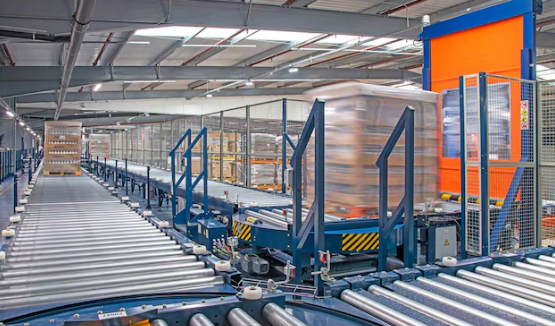
Walk into most Australian warehouses during peak hours and you’ll spot the same problem. Forklifts queue up at choke points whilst pallets sit idle on the floor. Pallet conveyor systems break this pattern entirely, but not in the way most operations managers expect. The real transformation isn’t about replacing forklifts. It’s about eliminating the hidden waiting time that devours a significant chunk of a typical shift. Pallets move independently of operator availability. Your receiving dock no longer dictates the pace of your entire facility.
Enhanced Operational Speed
Equipment brochures won’t tell you this. Speed improvements come from eliminating decision points, not from faster belt movement. A forklift driver makes dozens of micro-decisions per trip. Which route to take, where to pause, when to yield. Conveyors follow fixed paths that never second-guess themselves. Facilities often see throughput gains even when conveyor speeds seem slower than a competent forklift operator. The consistency matters more than the velocity. This becomes particularly obvious during shift changeovers when human performance naturally dips.
Workplace Safety Improvements
Insurance assessors have spotted something peculiar in facilities that install pallet conveyor systems. Injury claims drop, but not where you’d expect. Back strains and forklift collisions do decrease. The biggest safety gain comes from a psychological shift. Workers stop taking shortcuts when they’re not racing against machinery. They don’t squeeze past moving equipment or rush to clear pathways. The conveyor becomes the warehouse’s pacemaker. Everyone, including pedestrians, can predict and respect the rhythm. One Melbourne distribution centre found their near-miss reporting actually increased after installation. People felt safe enough to report hazards they’d previously ignored.
Space Optimisation
Most warehouse managers calculate space savings wrong. They measure the aisle width reduction and call it a win. The real estate dividend hides in a different column. Vertical clearance. Pallet conveyor systems let you stack higher because you’ve eliminated the forklift mast height requirement. That ceiling space you couldn’t touch before? Suddenly it’s usable. A Sydney cold storage facility discovered they’d been losing an entire storey’s worth of capacity. Fork mast extensions needed clearance that conveyors don’t. Racking layouts that seemed set in stone for years become negotiable when gravity determines your vertical limits instead of lift mechanisms.
Consistent Accuracy
Conveyors make mistakes, just different ones. A forklift driver might deliver to the wrong bay. A conveyor with faulty sensors will deliver to the same incorrect bay every single time. This sounds worse until you consider the diagnostic difference. Human errors scatter randomly across your facility. Conveyor errors repeat in patterns that your warehouse management system can actually catch and flag. A Brisbane pharmaceutical distributor found they could spot system faults within a few cycles because the mistakes were predictable. Random human error took weeks to identify through inventory audits. Consistency doesn’t mean perfection. It means you can see problems coming.
Scalability Advantages
Scalability sounds excellent in planning meetings until you’re actually scaling. The challenge isn’t adding conveyor sections. That’s straightforward mechanical work. The headache lives in the transitions between old and new zones. Pallets moving from legacy systems to expanded areas need handoff points that don’t create new bottlenecks. Smart facilities design these intersections with deliberate overcapacity from day one. They accept short-term inefficiency for long-term flexibility. A Geelong manufacturing plant learned this after their first expansion required weeks of reduced throughput for integration. Their second expansion took days because they’d built slack into the original design.
Reduced Product Damage
Damage reduction metrics tell competing stories depending on what you’re moving. Fragile goods benefit enormously from controlled conveyor handling. No argument there. Heavy industrial products reveal a different truth. Conveyors can actually increase certain damage types. Pallets that would survive a forklift’s rubber tyres sometimes suffer from roller impact points on conveyors. Particularly at transfer stations. The overall damage rate drops, but the damage pattern changes. You stop seeing crushed corners from fork impacts and start seeing bottom deck cracks from repeated roller strikes. Facilities need to adjust packaging strategies accordingly. Nobody mentions this during the sales process.
Conclusion
Pallet conveyor systems deliver their biggest advantages in the gaps between equipment. The waiting, the repositioning, the uncertainty that plagues manual operations. They’re not magical productivity machines that solve every warehouse challenge. Some operations discover they’ve simply automated their existing inefficiencies at higher speeds. The facilities that genuinely transform their operations are the ones willing to redesign workflows around what conveyors do well. Rather than expecting conveyors to mimic what forklifts did poorly. That distinction separates warehouses that install conveyors from warehouses that actually benefit from them.